
taken from my car, while in completely stopped traffic – the 10 to the 101 interchange in Downtown Los Angeles
As a child, in small town Southern Utah, I was afraid of the dark – in certain contexts, I still am. The move to Los Angeles when I was nine opened in me a capacity for love of place that I had not known before. The light – oh the light, an ocean of it – turning the smoggy marine layer of the sky orange at night, trickling in between the slats of the blinds and gaps in curtains, ensuring that no matter how late the hour, the contours of my surroundings were constantly available to the receptors behind my eyelids. No matter where I was in that swelled sprawl of urban humanity, that vast network of neighborhoods and freeways, there was always a streetlight glowing near enough so that darkness was never absolute, wrapping me in a warm sense of being exactly where I was, along with a new awareness, a sweet loss of where I had come from. Is it funny that falling in love with city streetlights is what simultaneously translated into a deep attachment for the Aspen-silhouetted, dark, Rocky Mountain sky, where there was such little human illumination pollution that the Milky Way was so bright and clear it looked more like a gentle, high-hanging cloud cover than a collection of individual stars? The street lights always decide me, though, even as my hometown has grown out of its adolescent dark age (the population having quadrupled since I left); I am a city girl now, my sense of home belongs to full, busy streets guided by those beautiful, slim, towering beacons.

#1 – just outside my window
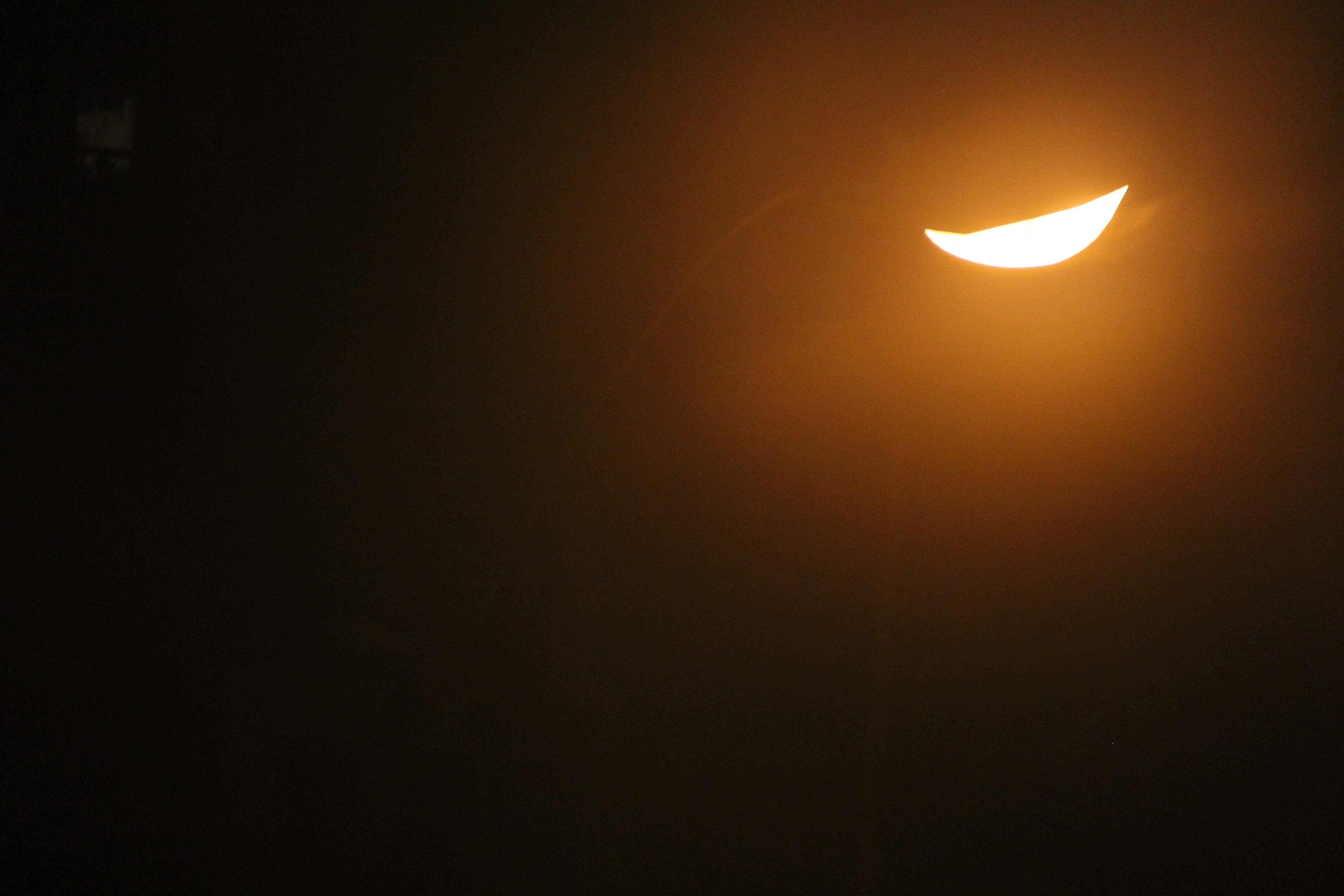
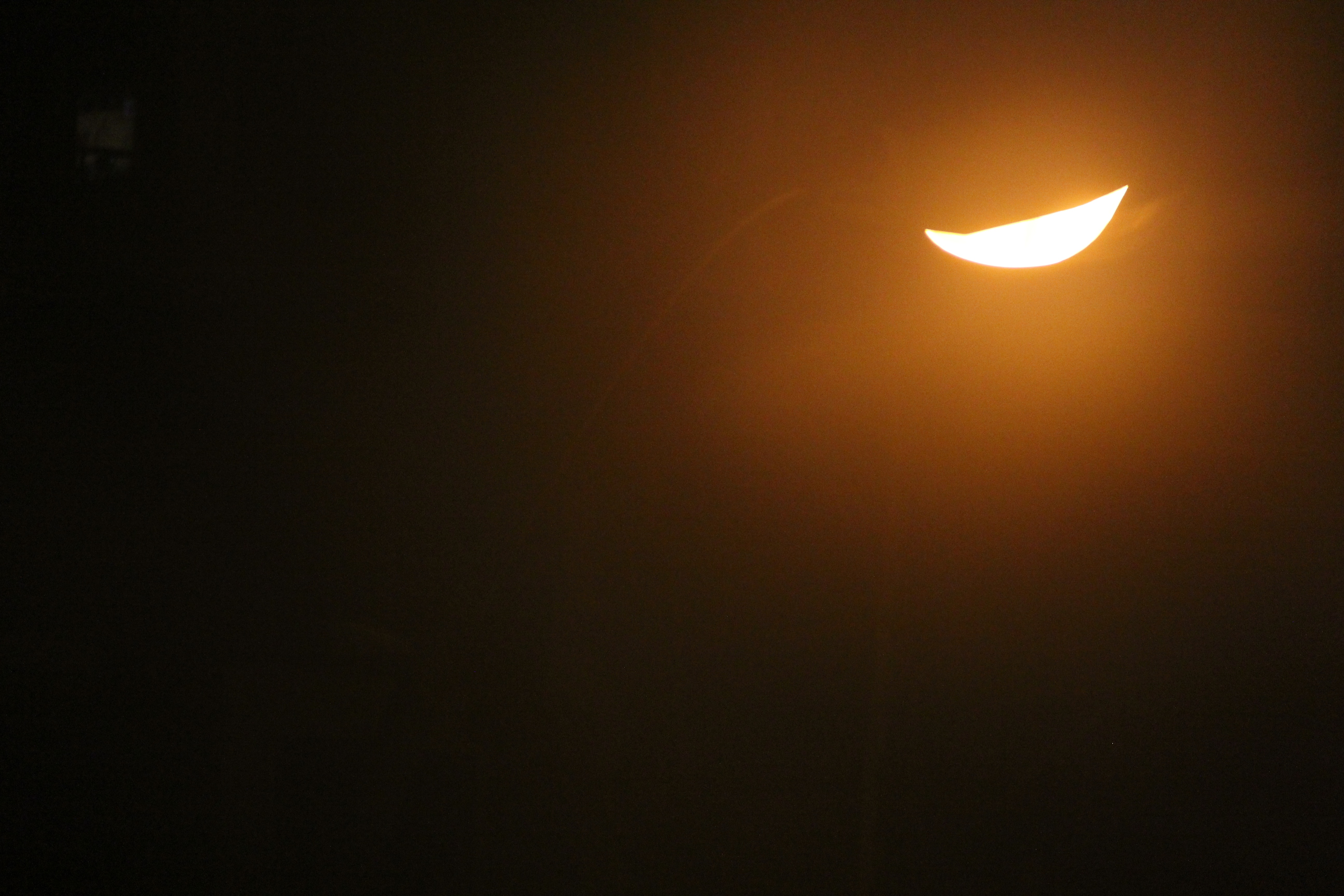
This is the first one of this series that I took and that gave me the idea to expand on it. It looks the way residential streetlights feel, not crazy bright, warm, cozy; they are there, but often in an unassuming, background kind of way. Concept-wise, perhaps this wasn’t the best choice for a beginning photographer, because taking pictures of light sources is not easy (at least for me) to do. But I did get some things that I liked. For this first picture, I softened the focus all the way out and moved the light out of the center of the lens, and this morphed the whole background into a false darkness – the trees and buildings behind were actually super lit up.
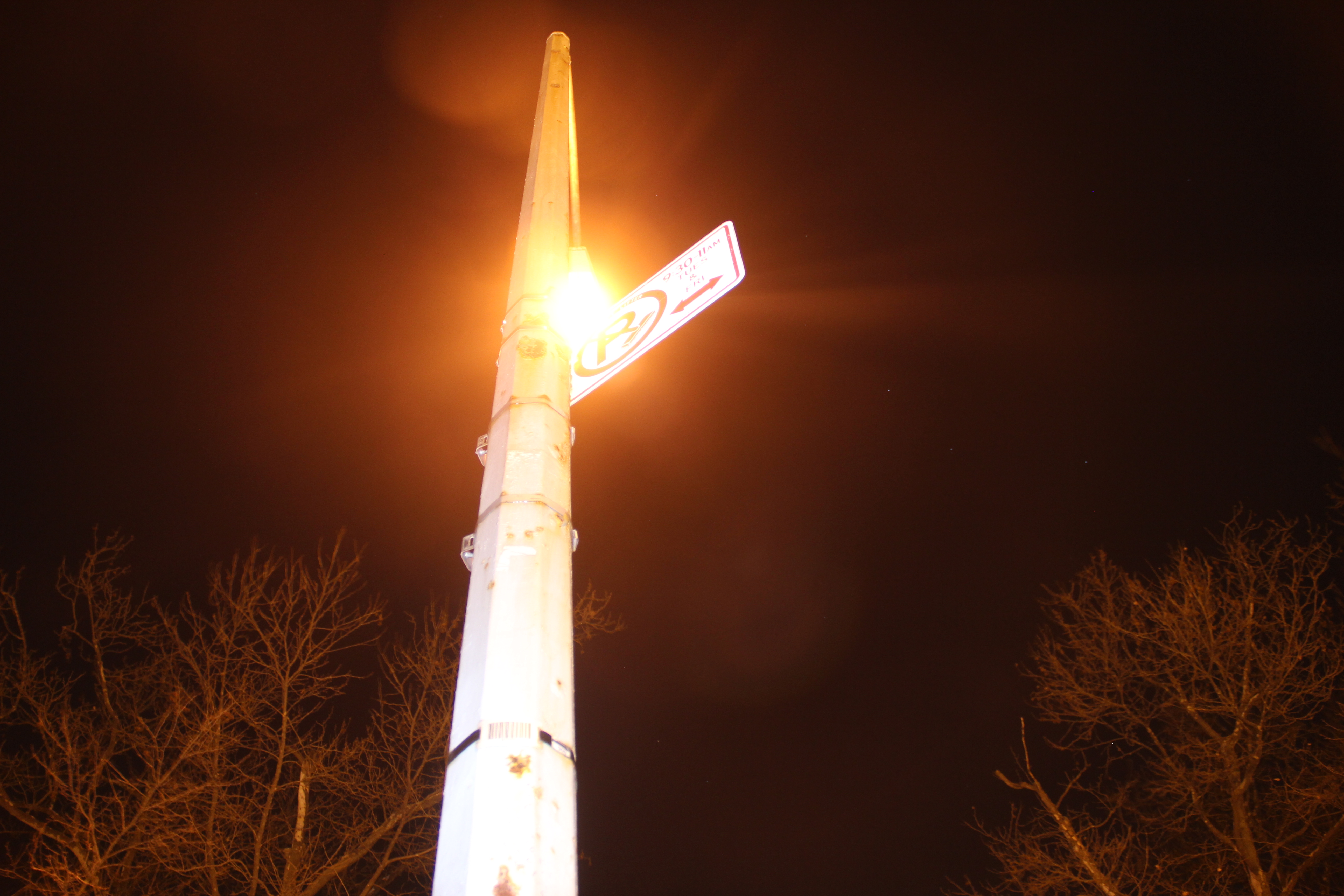
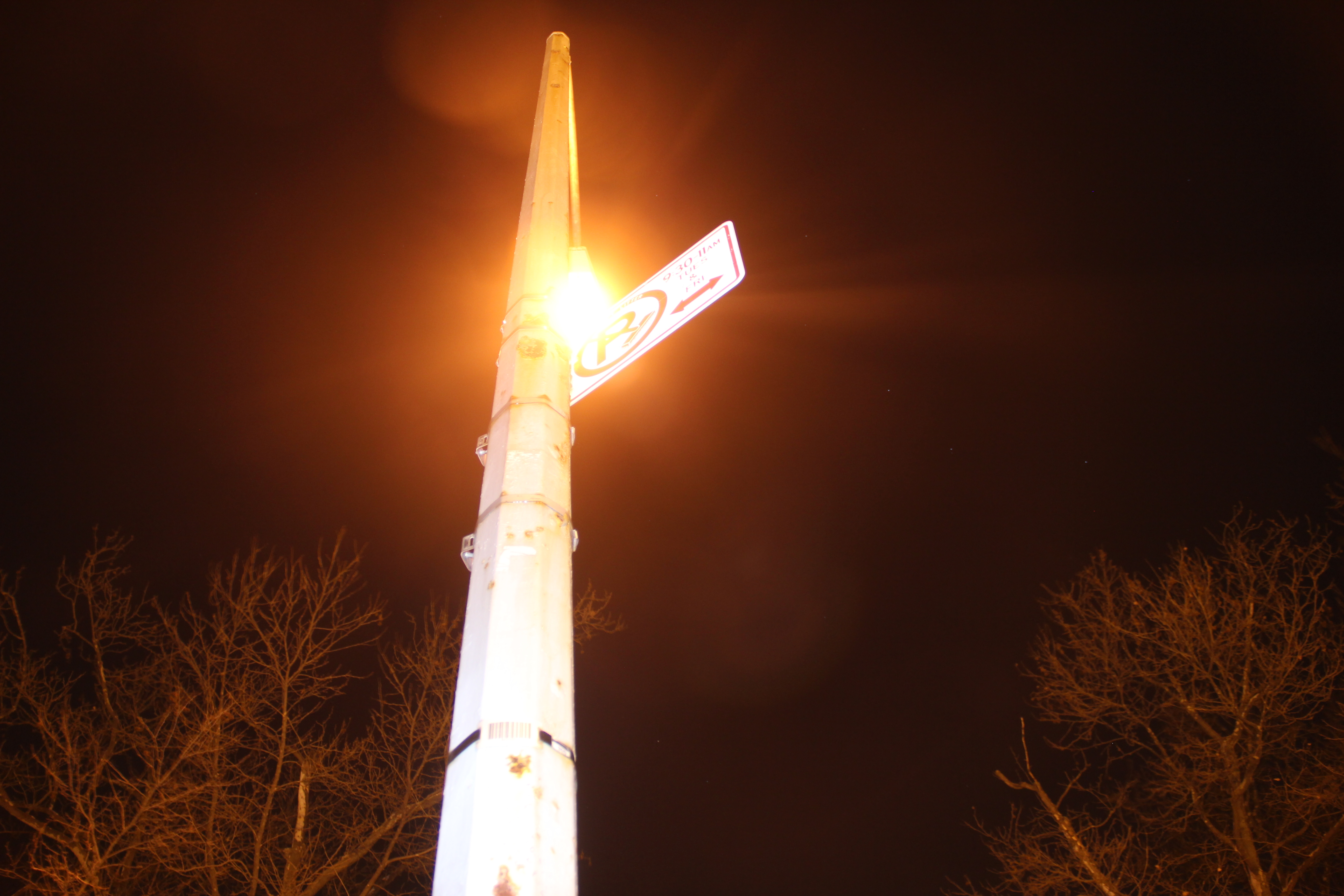
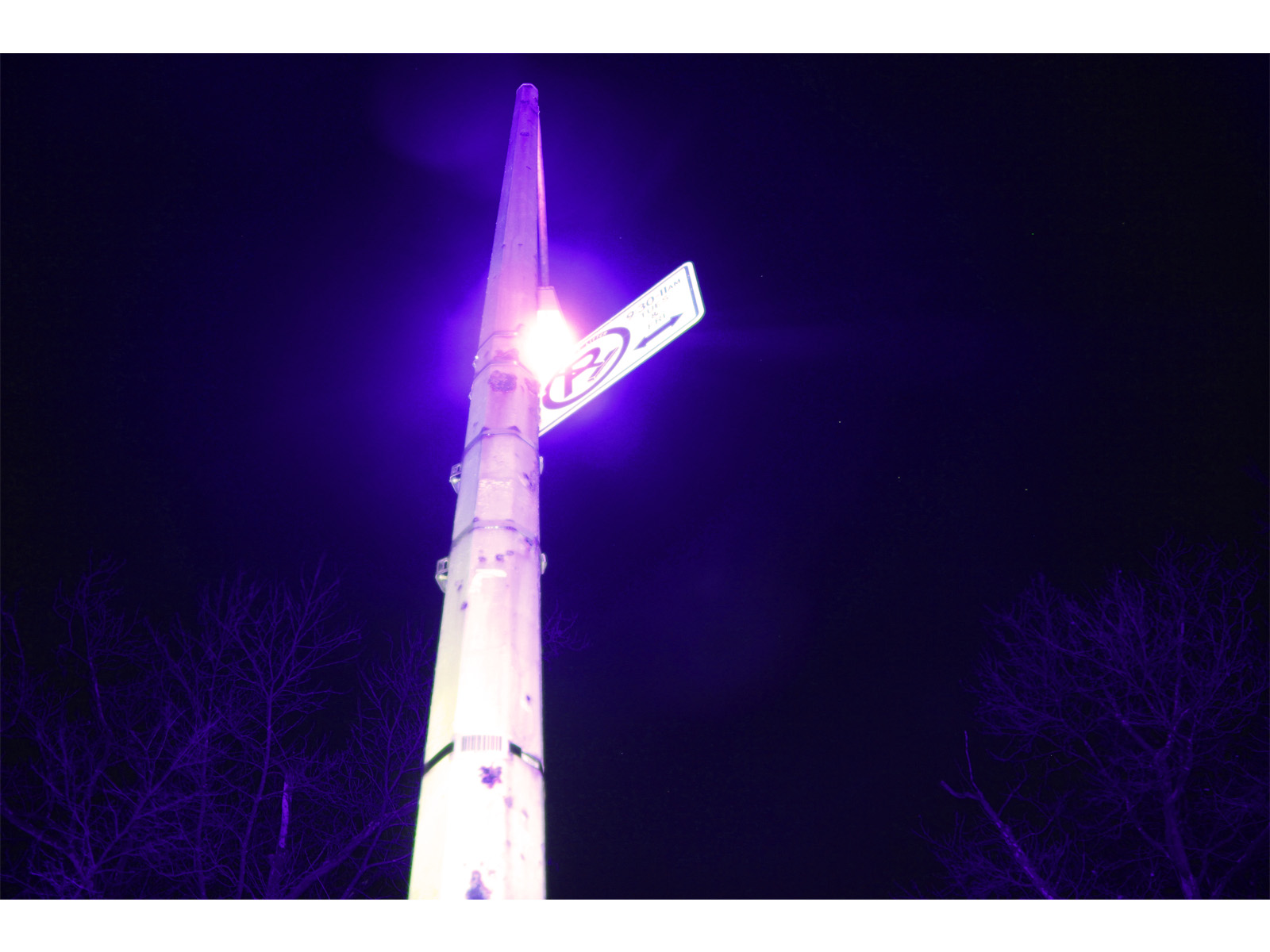
The following pictures are the same street light, but in #1a, it is in as much focus the dirty exterior of the window would allow (It’s permanently shut because of the AC). I included it just for contrast to the first. Also, as long as the dirt on the window wasn’t being focused on as foreground, I found it interesting that it behaved a great deal like lighting gels (corals) do in theatre. It was like free diffusion (as a matter of fact, almost exactly like Rosco118 cool, since it was so far from both the lamp and the lens); the light was a lot deeper amber and a little harsher through the open window, but I liked this “filtered” look better. In the photo #2, you can see the quality of the naked light, taken from directly below.
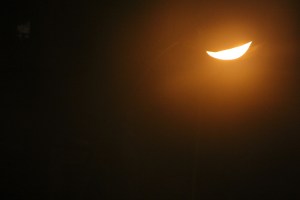
#1a – still just outside my window
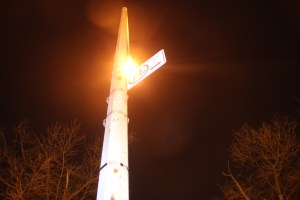
#2 – still outside my window, but now the camera and I have joined it
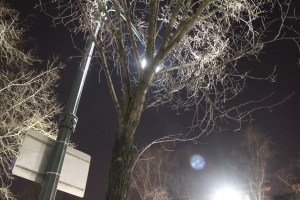
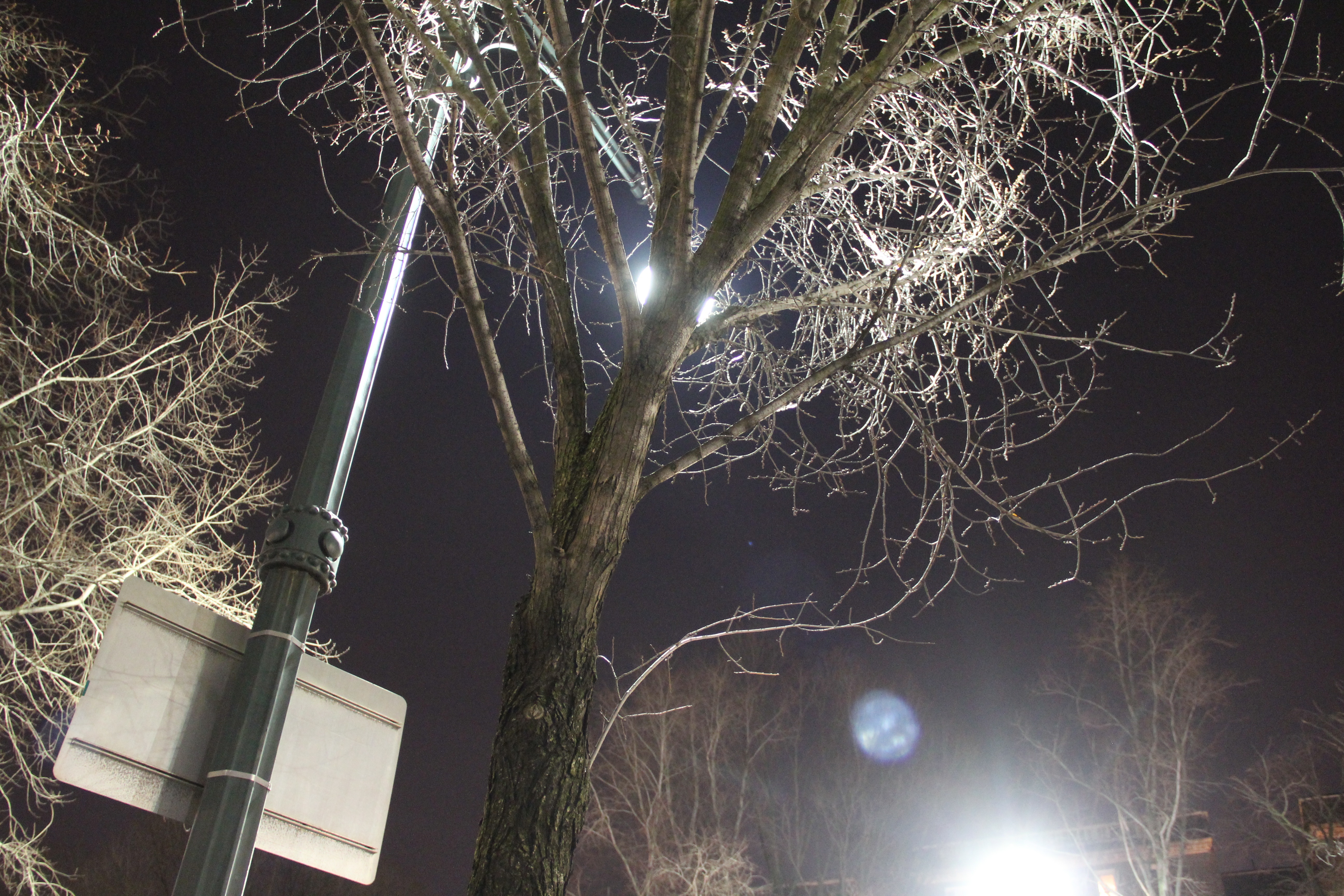
#3 – Eastern Parkway, Brooklyn
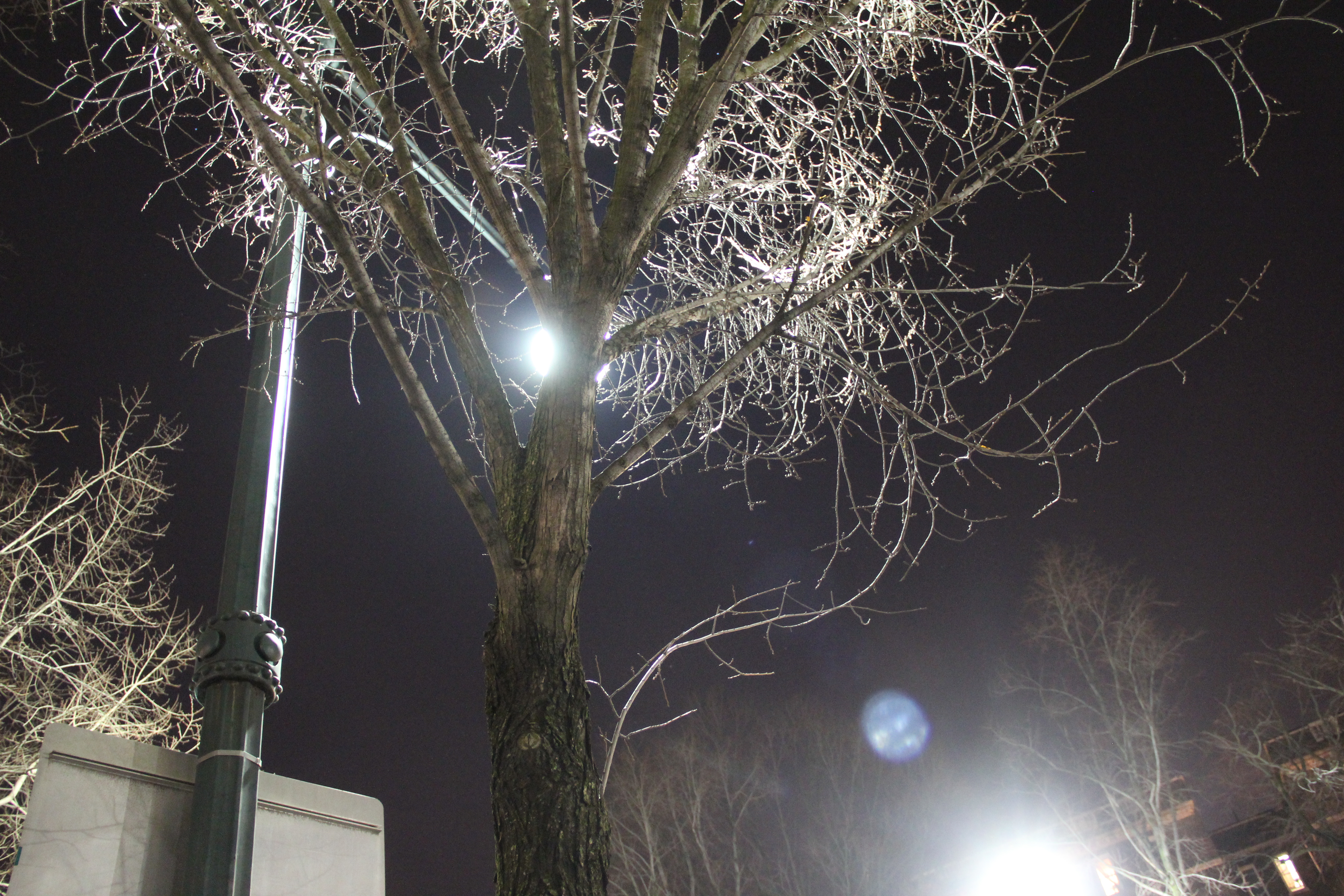
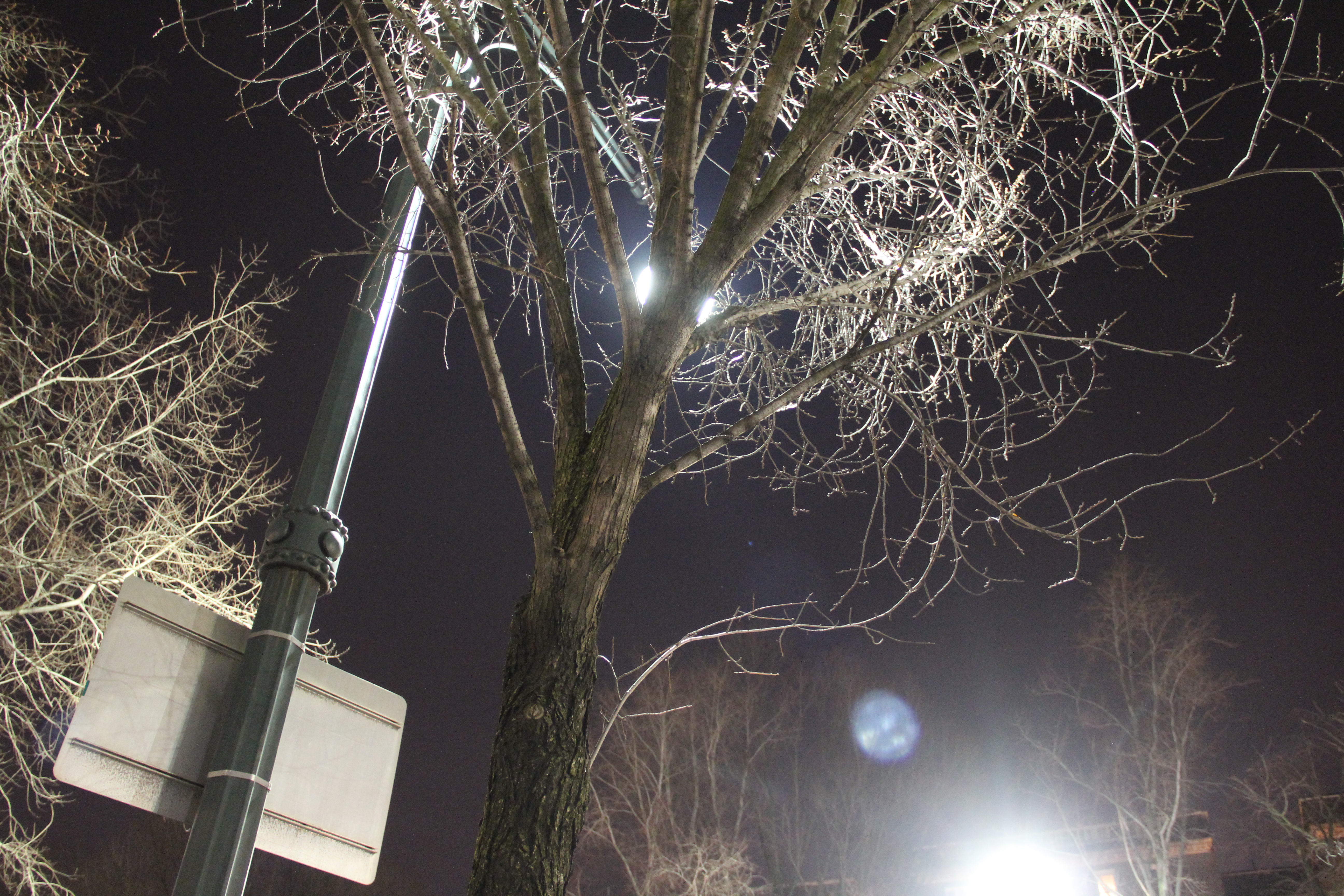
The next picture is of one of my favorite things to look at in any city I go to: light through the branches of trees. There are more trees in Los Angeles per square mile than in the settled valleys of the cold desert mountains that I came from. Cities are often little urban forests, the growth so dense. Sometimes the trees are even lit intentionally, in shopping districts or in affluent neighborhoods (lights focused to shoot up the trunk of the trees and dissipate into the branches, emphasizing how tall they are; they do this with palm trees a great deal in California). I find the joining of man-made light and the faux nature of the trees growing out of carefully planned holes in the concrete and asphalt a fascinating and unendingly various commentary about that city, that neighborhood, that street (especially if it has NO trees). This particular walk along Eastern Parkway is one I take often, and I wanted to include it because the cool temperature of the light and great height of these street lights is in sharp contrast to the gentle amber just two blocks over, and it creates a whole different feel. The discrepancy of course has a good explanation and is incredibly practical: the lamps in these street lights are brighter (tungsten -halogen, perhaps?) and taller because it is a bigger, busier street, the automobiles and pedestrians are in need of more light to prevent accidents. But it also sends a signal to anyone versed in city life: those cooler, brighter, taller lights are where you will find people, businesses, freeways on-ramps, metro-stops, restaurants, etc. At night, you can find the larger thoroughfares in a strange city simply by following these kinds of lights. I want to figure out how to better isolate the intense light and sharp shadow on the branches of the tree, the way they are both hotly lit up and coldly in shadow, silhouette and foreground, and still get the actually street lamp as well. I didn’t quite get the sense that I wanted without also getting a huge amount of flare in the lens (my biggest problem with all these pictures), but hiding the hot spot of the light behind the tree got me closer to what I wanted.
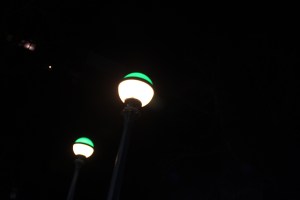
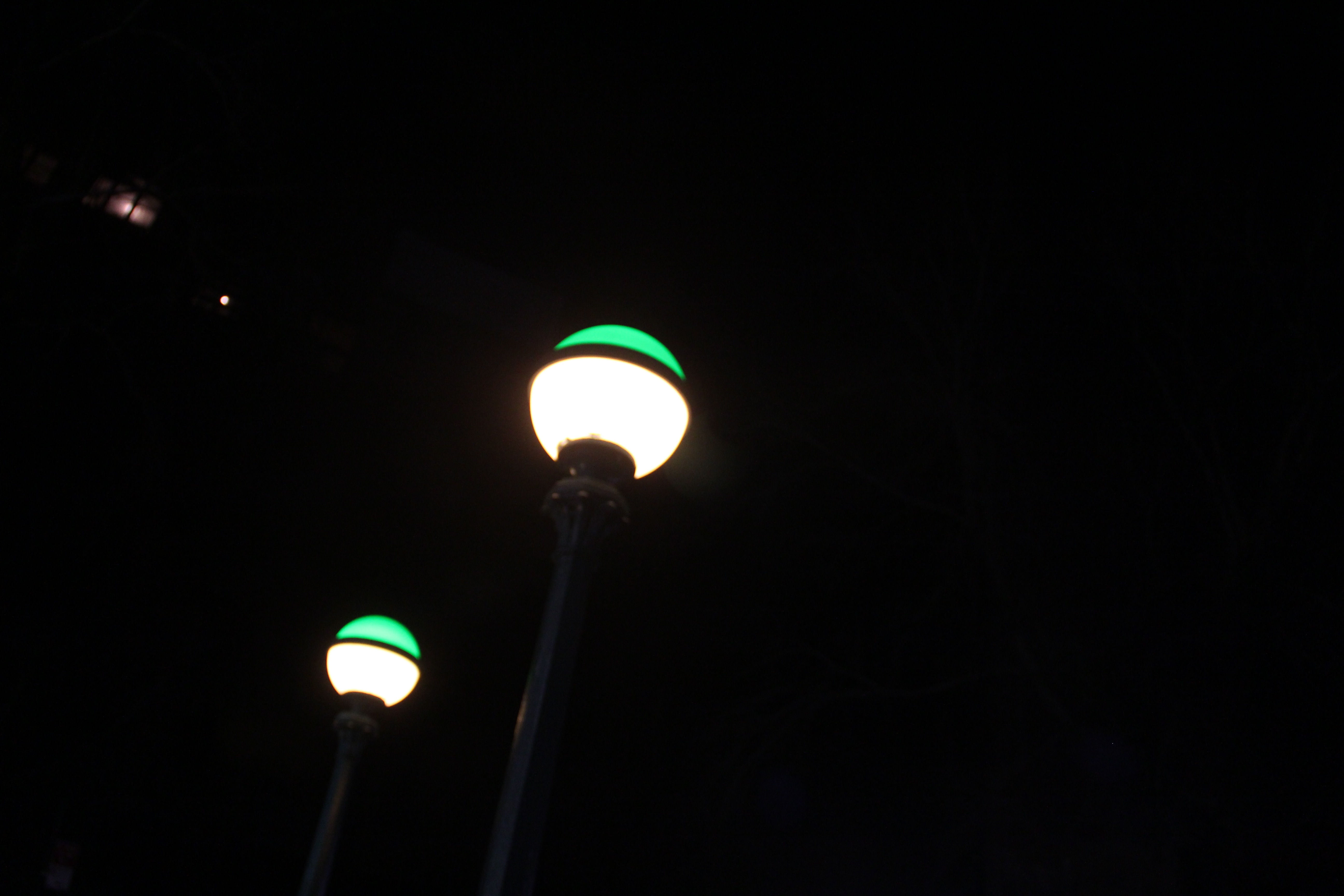
#4 – 2,3,4,5 Subway, Franklin St, Brooklyn
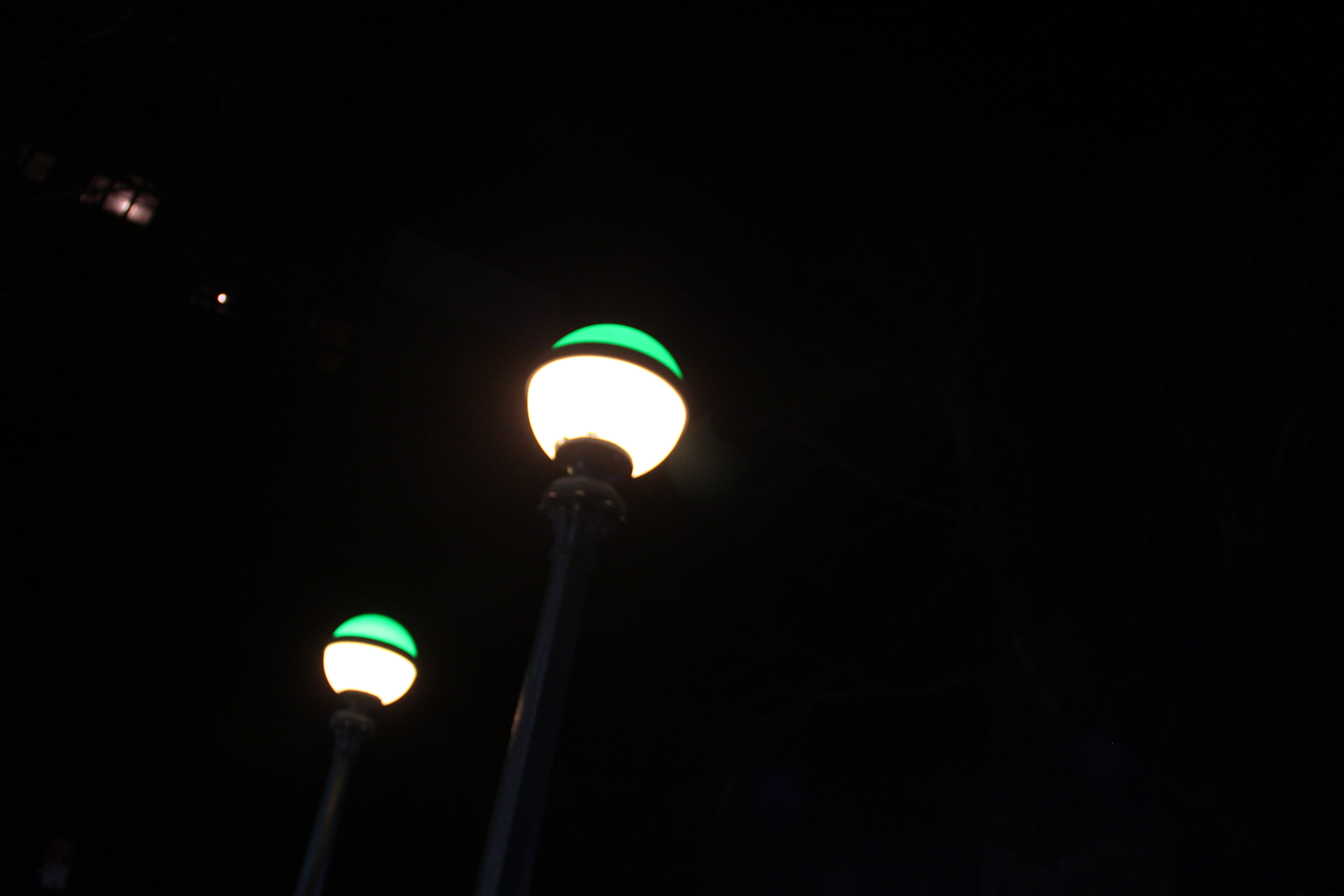
Certain kinds of lighting structures in cities communicate something particular about that city (semiotics; classes all coming full circle), but, like any code, it is something you need to learn. New Yorkers know to look for these particular illuminated shapes and color combinations when they are searching for a subway entrance, which offer relatively little by way of brightening up the street or the steps leading down, but are there simply to tell people about an egress. I tried to shoot these two without any other lights showing up in the back ground, but it was tricky with all the folks coming in and out and where I needed to put the legs of the tripod down, so I got a little of the windows in the apartment across the way.
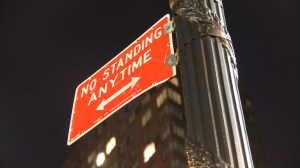
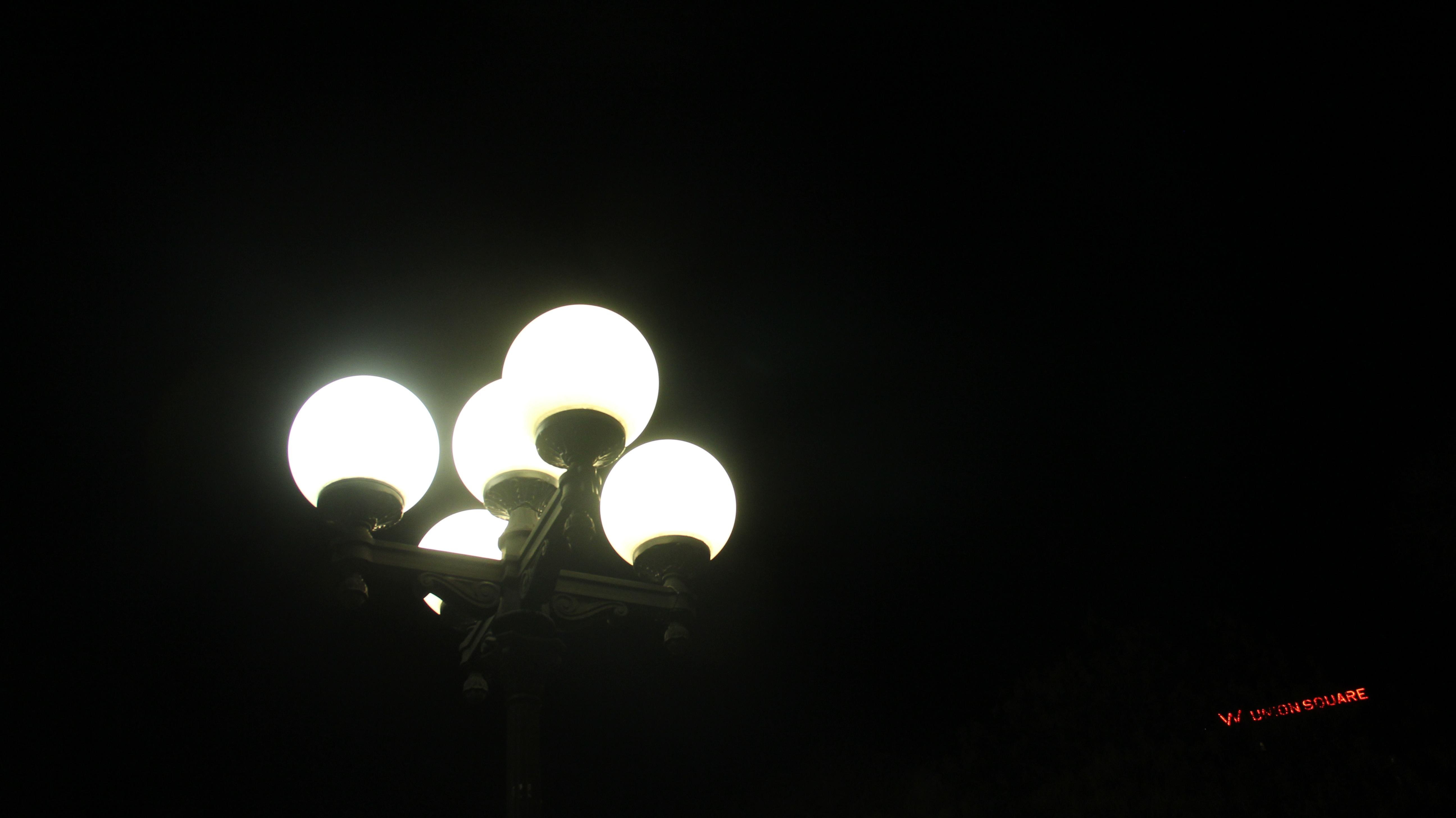
#5 – Union Square
Street lights are a great deal of the time, invisible. We, in our urban mindsets, don’t even see them (in New York, I often find that I am the only one in my immediate vicinity that ever looks up, amazed at how much city there seems to always be way up above my head). I have not reasearch on this, but it seems to me that older street lights are almost always also decorative; perhaps when it was a newer technology, especially in the gas light days, people did notice them, as they were not only novel, but rare. Today we notice them when they are not working, or more often, as their alter-egos, as sign posts (and even then, we don’t notice them much, but instead the signs attached to them). This amazing old street lamp is made of what seemed to me to be bronze-alloy, beautifully fluted and intricately wrapped with stands of delicate cast laurel most of the way up, it also has a detailed base and a flowingly curved arm above to where it curls out to cradle up-side-down the actual lamp, an exaggerated domed glass affair. But, the sign is so red and admonishing, coveys important important warnings, that is what draws the eye. I didn’t use flash, this is just the ambient lighting, at around midnight, flat on the sign, but you can see the glint on the right side of the lamp post from the multiple lights all around Union Square Park, pictured below.
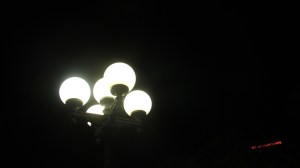
#6 – Union Square, New York
I loved that I was able to get rid of enough glare to capture this image, a self captioning picture by the tiny-seeming lettering in the right hand corner, telling us that we are seeing West Union Square. The shift in street light types always says a great deal about a place, especially parks. These lamps (I mean the bulbs) are probably not cheap in this day and age of LED and CFL’s, but they are scattered liberally throughout the square – a very different kind of light for a park than, say, huge flood lights for a baseball diamond, or greenish florescence for a running path around a neighborhood park, – or the lack of lighting you get in a lot of the city parks in LA, where it was common knowledge, they were “officially” closed once the sun went down (that didn’t keep us out, though). These pleasant, attractive and some what ostentatious street lights around Union Square scream about affluence, history, and a degree of flamboyance outside of what is purely functional. Also, just as aside, not a single one that I spotted was burned out.

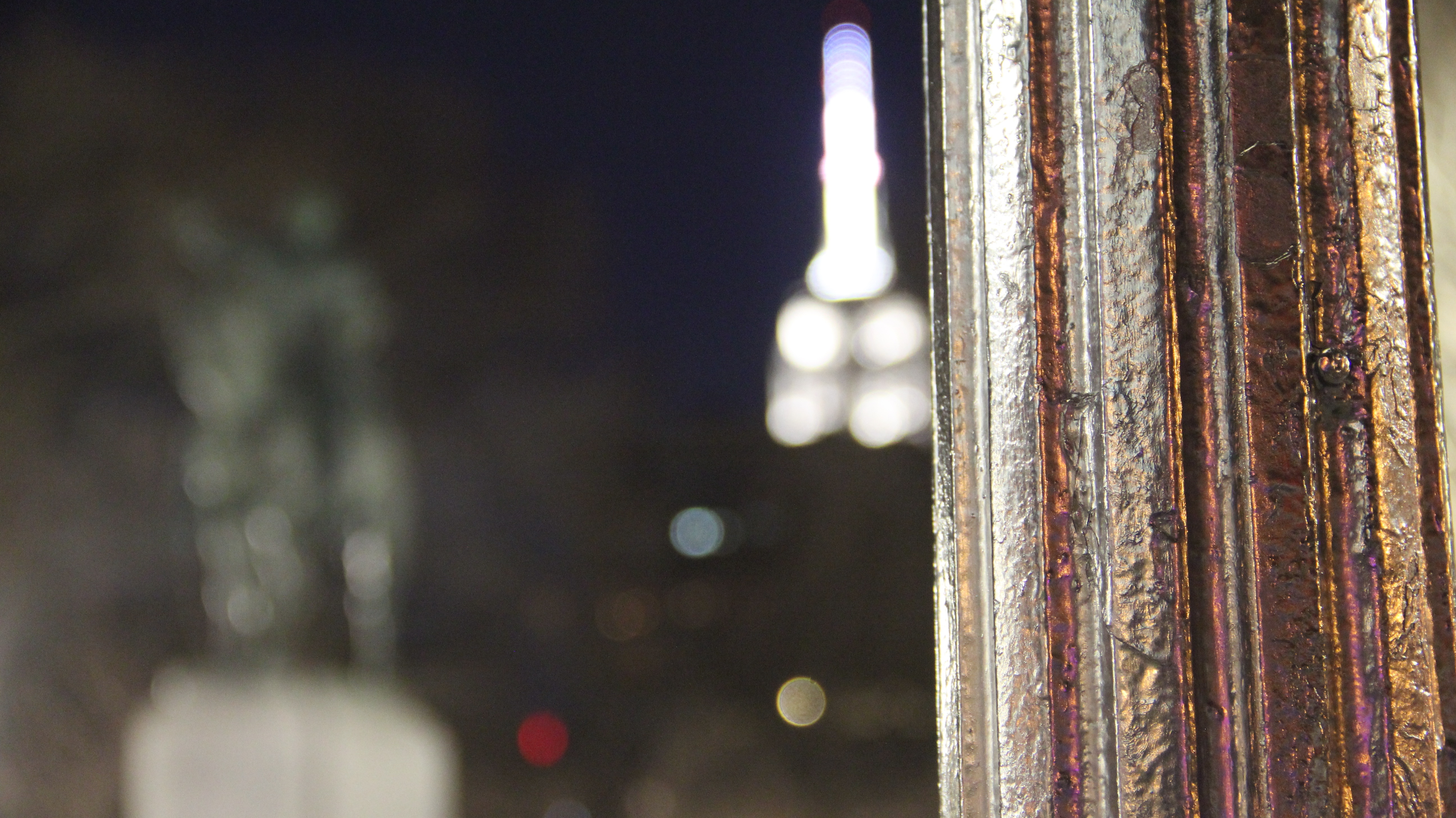
#7 – Union Square, New York
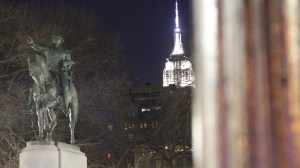
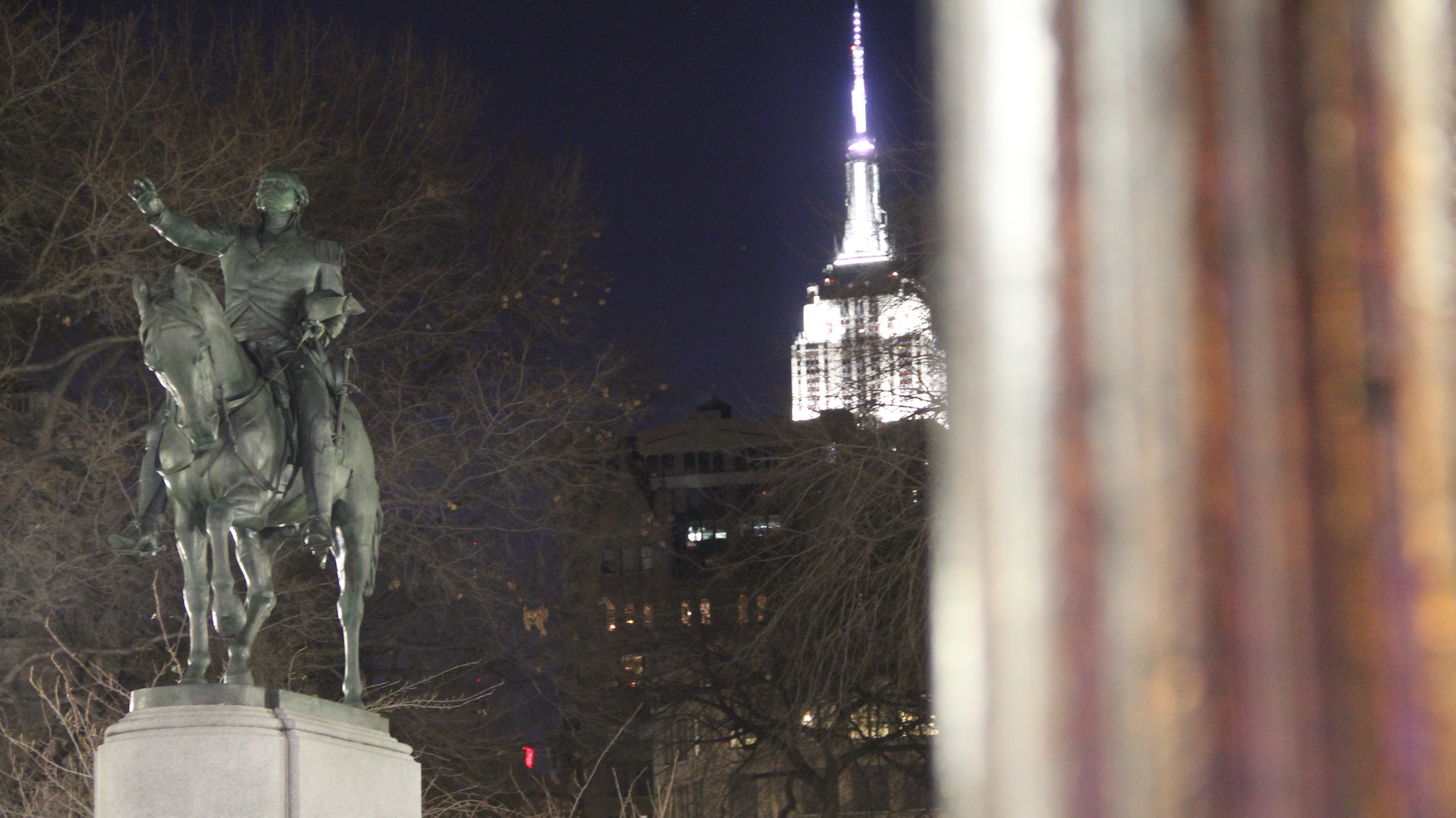
#8 – Union Square, New York
This is the same street lamp as #6 (or maybe one over) where I decided to play with foreground and back found. I took a whole bunch of these, from all over the Square. Again, there is no flash, this is simply the ambient lighting. I did end up having to futz with my exact piston/zoom/settings in order to get the kind of focus and framing that I wanted for this shot. At first I was trying to get more of the actual post in, but then I really liked the sort of unbalanced (is that the right word?) frame – how heavy it is on the right with the majority of the post shown, and the lightness of the trees and the pointing main and the spire of the Empire State all gesturing at the sky, which I was surprised came out so blue – it looked pretty grey and dreary from where I stood. From the closeness, we can see the detail of the fluting on the lamp post, as well the lighting that this street light it self casts on the sculpture.
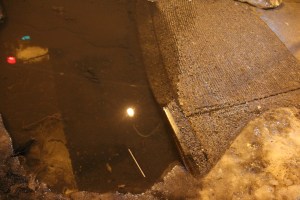
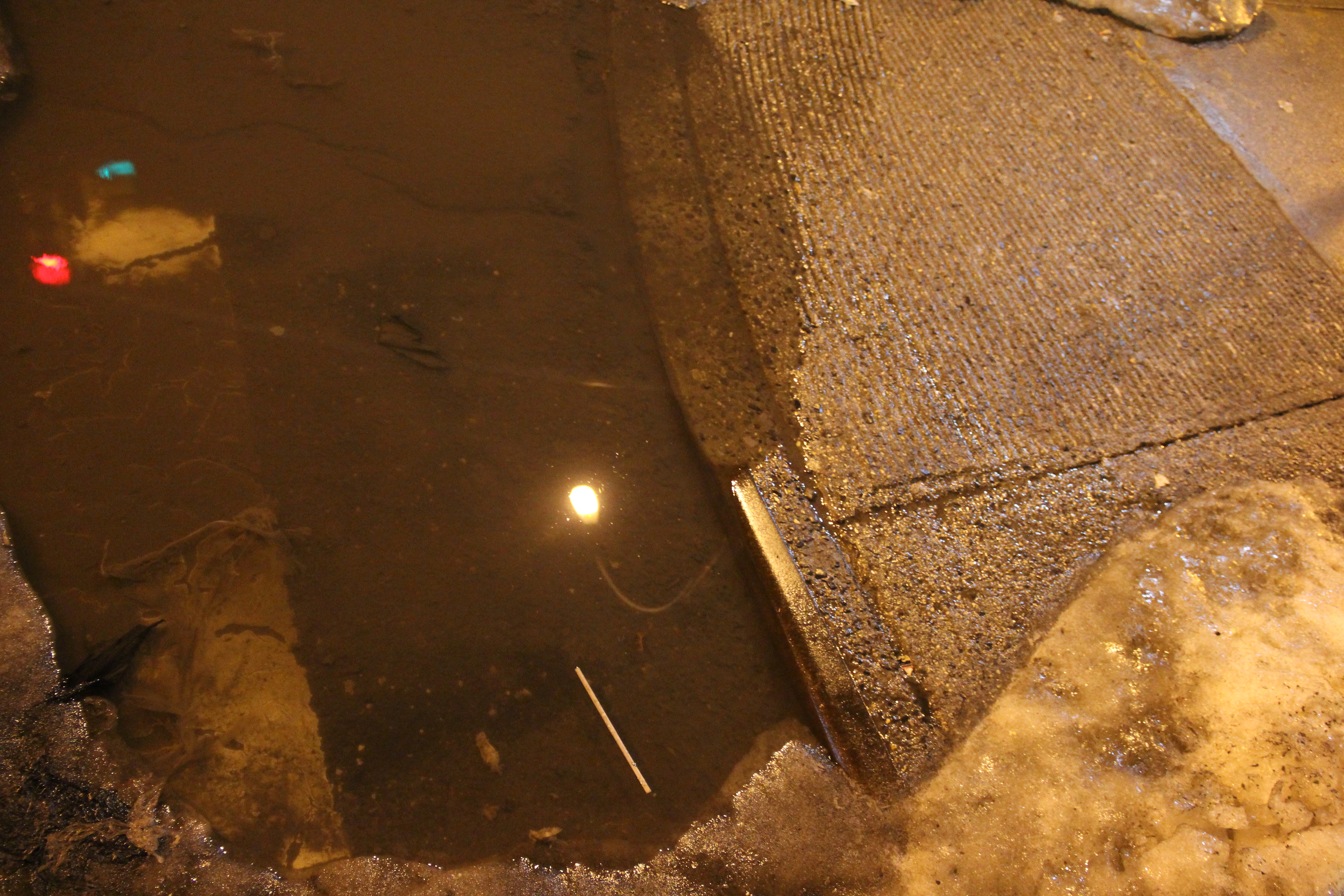
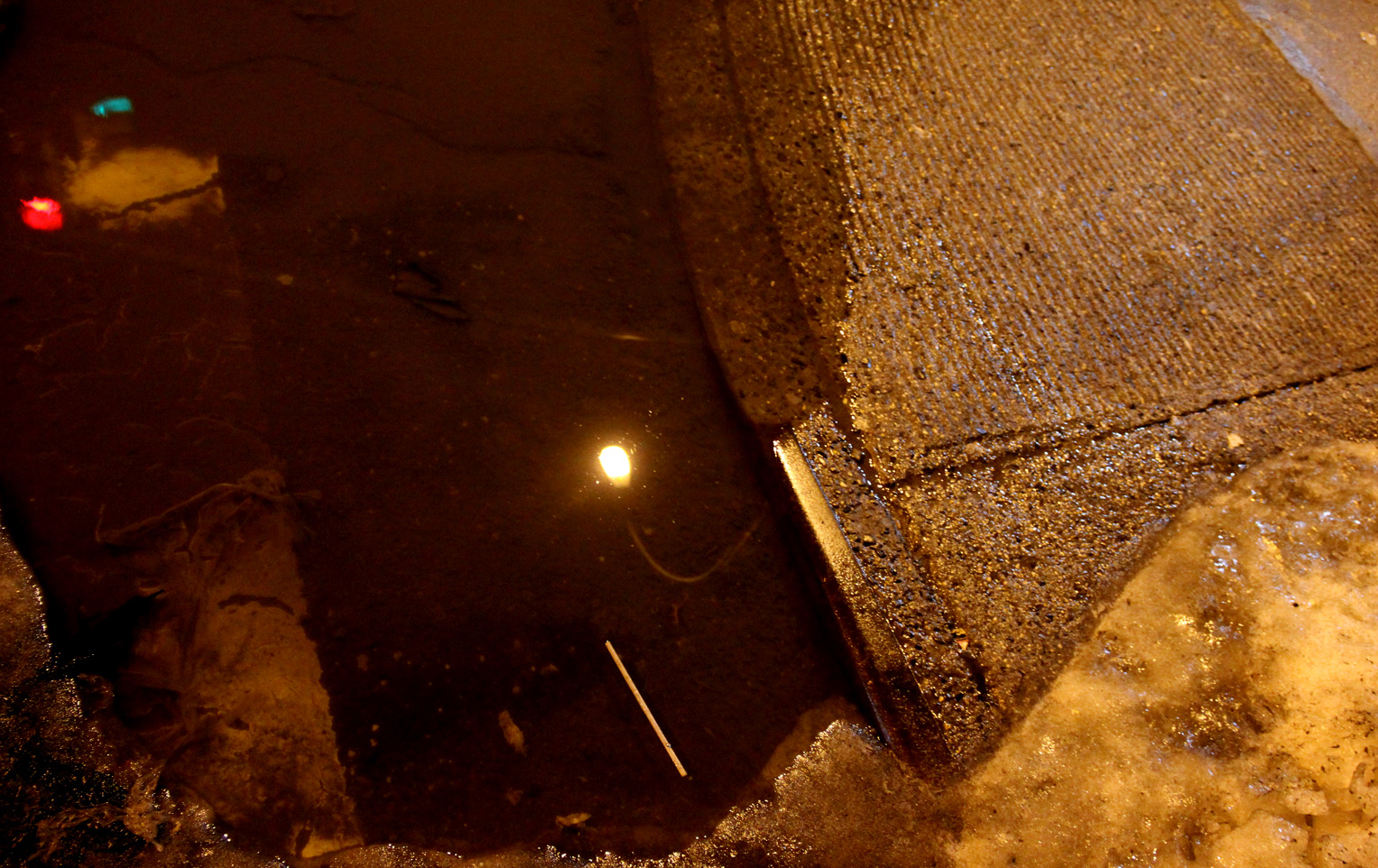
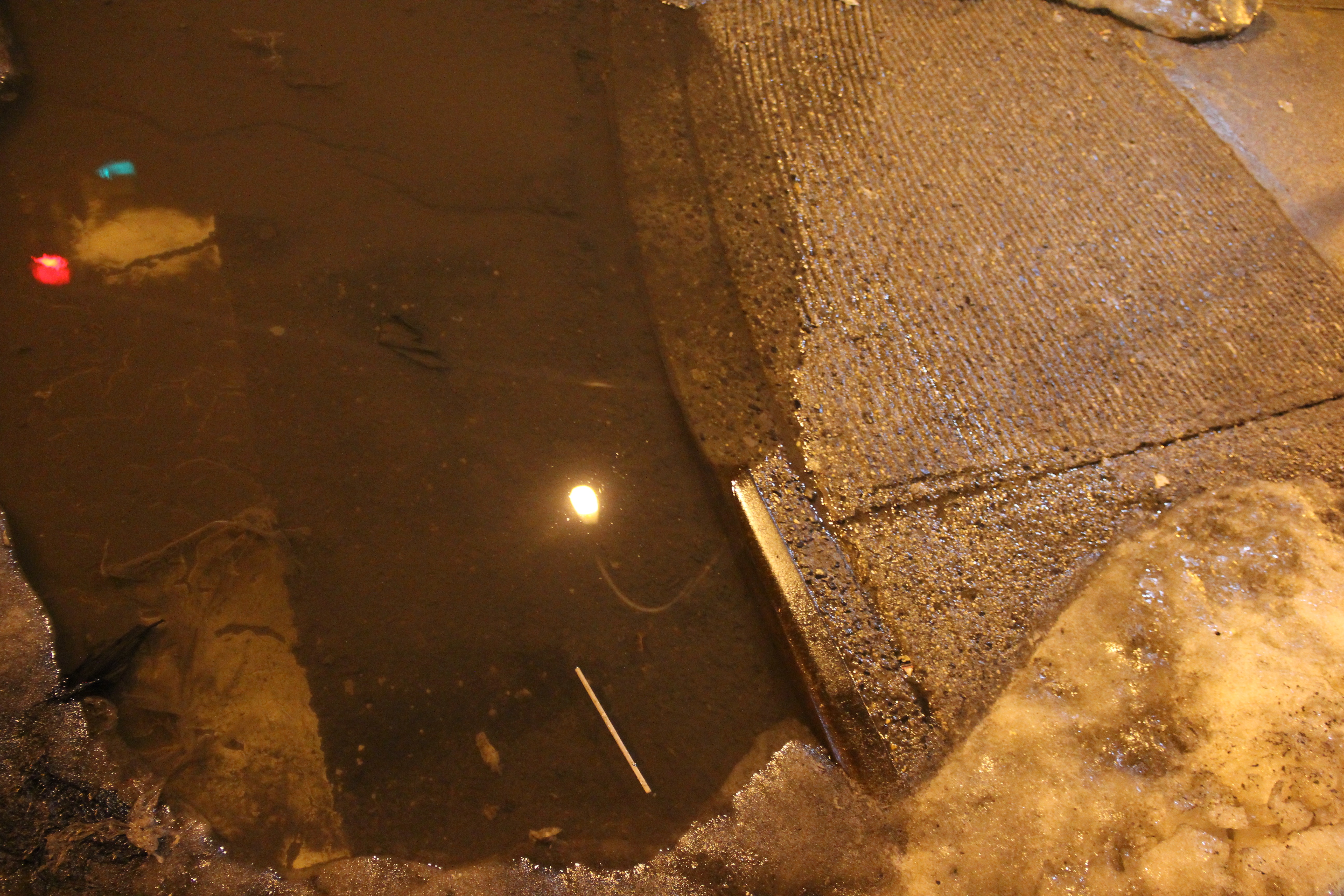
#9 – Franklin St, Brooklyn
The ground being lit up by the street light, reflected here in an intersection pond.
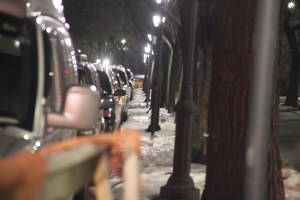
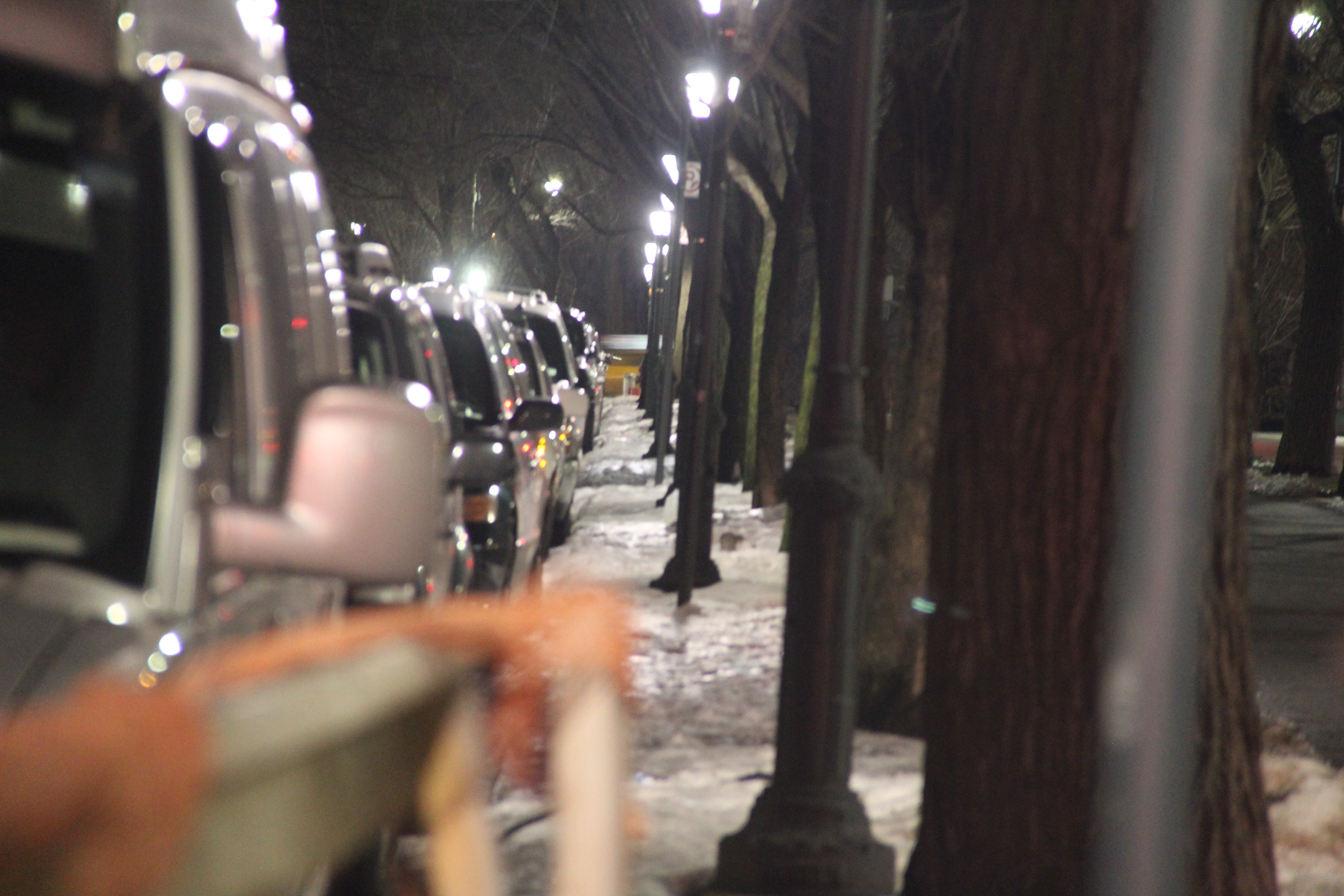
#10 – Eastern Parkway, Brooklyn
For this photo, I really needed to be up higher, and I waited until I was about frozen for the car with the head lights way off in the distance to the left to drive away or turn off the lights, but they refused to go. I wanted to capture the long row of perfectly in line street lamps on this street, older and shorter street lights running up and down the Parkway, and never quite managed it.
 Perhaps I had had too much to drink, I’m not entirely sure, don’t remember what drove me out to the cold streets, into the block of time unmeasured by the hands of my unobserved watch, but instead by the steps of my long-since-numb feet. Direction, destination, endgame: all unknown, not just for that night’s walk, but they seemed obscured from me for all the nights to come. Where was I going?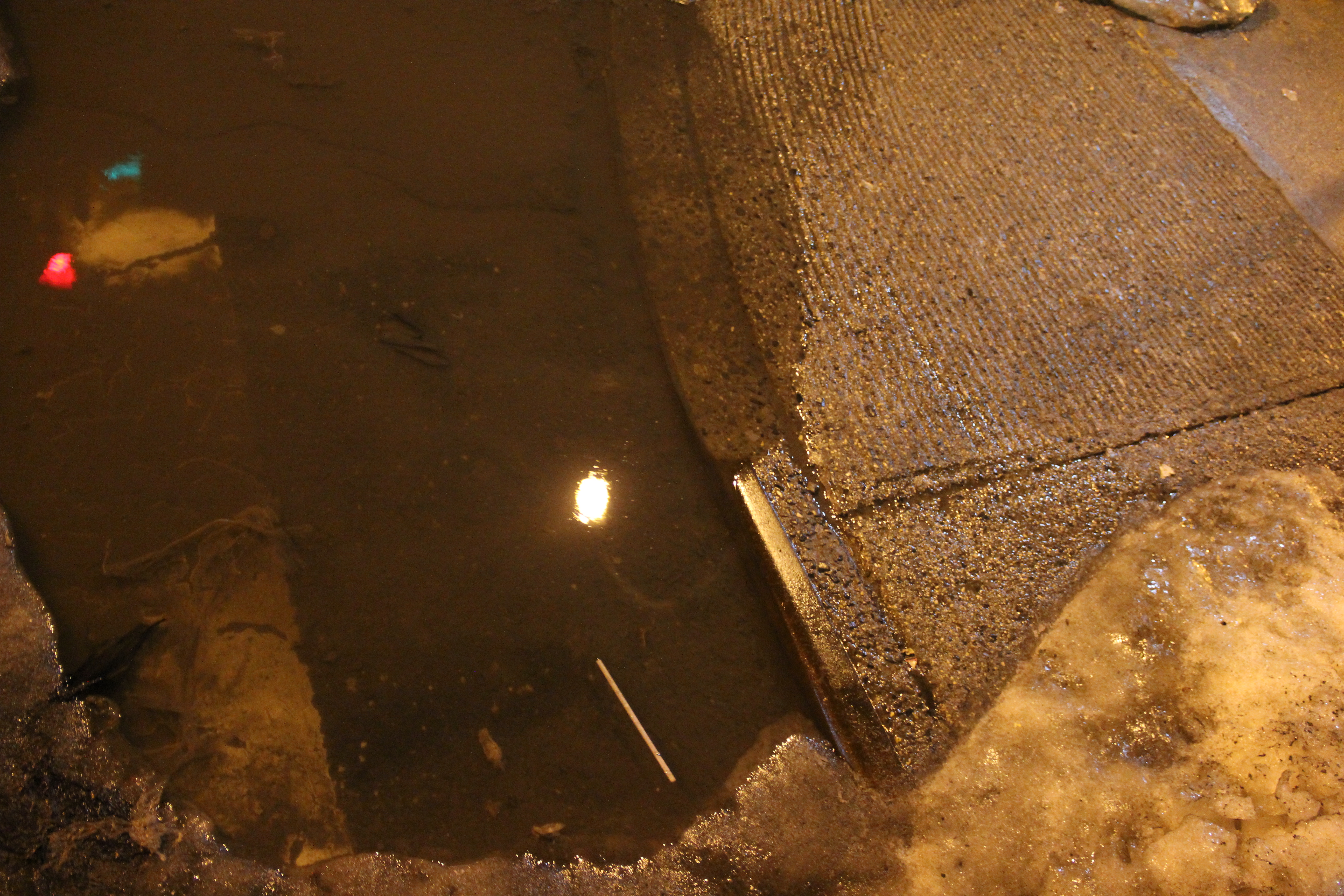










 Charlotte Jayelle Wheeler