The path that lead me to the New School twists, the journey difficult for me to trace. I have come here from: the arch of the proscenium, connected to the audience through that strange, shared tension of their safe darkness and my exposure for their sake under hot stage lights; the ring of the Circus, walking on a ball, turning back flips and juggling fire or knives; a long and largely unfocused sojourn through academia, struggling against my blue collar background that made me feel that I did not belong in those ivory halls; from backstage, years of honing the unique craftsmanship of scenery construction, working wood and metal, using the real to create a sense transportation in time and space.
I have had, in the past, a very clear idea of what I wanted to do: use plays to explore social issues and through performance create a forum for groups in conflict to begin conversations. With every scholastic and professional experience I have had, the clarity of the “what” I want to do has dissipated, while the intensity of the “want” to do it has only sharpened.
My background is almost entirely in live theatre. The youngest of seven children, all actors, my childhood was highlighted by singing and dancing and acting. There was rarely a time when I was not in a show or rehearsing for one, often missing school for auditions. My goal from an early age was to have my own theatre company. I attended the Los Angles County High School for the Arts and began seriously producing my own work before I graduated. I created my company, Student Theatre of California (STOC, 1996 – 2000) with two fellow students when I was seventeen. I ran this company for two years, and I became quickly disenchanted with the difficulty of producing work that could attract a diverse audience, be sustainable, and have socially urgent content rather simply being entertainment for the sake of escapism.
After high school (much to my family’s disappointment and incomprehension) I gave up performing, for the most part, becoming a full time technician and theatrical carpenter and enrolling in community college. My goal had not changed, but I wanted to find additional tools, knowledge and expertise in order to find ways to draw wider audience, keep a production in the black, and produce shows that asked difficult and relevant social questions. Being a carpenter allowed me to remain active in the arts while making a decent living. It took me eight years to complete my undergraduate degree, while academically meandering from business to anthropology, from to psychology to law, from history to welding trade courses. I finally got my undergraduate degree in sociology, with a focus in Activism and Social Change, from The New College of California, in San Francisco. I also attended the Clown Conservatory at the Circus Center, in San Francisco. I was quite interested in the use of spectaclism as a means for attracting press and non-theatre goers for smaller productions. As a scholar, I became incredibly interested the perception of history being categorically different from one group to another, from one nation to another, at the lack of empiricism outside of academia.
College had the same effect on me that it does on so many US students: disillusionment. The history of the United States was entirely complicated for me throughout college, and the content that I desired to explore often became more difficult to conceptually fit on the stage, it’s scope too limited. My need to accept responsibility for my place in the world as a citizen of the United States, to fully understand my own country and the myriad of cultures, histories and peoples whom make up its components intensified. At the same time, my search for the perfect recipe of combined elements that would produce viable and vibrant theatre remained elusive. As a result, over the years I have produced less and less of my own work, and feeling the rut of working every day to produce others’ visions and farther away from a capability to bring own into fruition.
I did a thesis track for my Bachelor’s, and the topic I explored was how political affiliation and corresponding media intake influenced the perception of US history. As part of my thesis, I produced a play; as part of the play, I showed a short documentary that I produced showing different people’s perception of a specific historical event, The Iran Contra, and how it differed based on political party affiliation and mass media intake. This multimedia approach brought me a revelation: The documentary, as cohesive piece, still exists, as is of course true of written thesis. The play, however, videoed and documented as it was, is gone. Even if remounted, it would be a different event from the one originally produced. This lead me to question, however tardy the realization might have been, of whether theatre was truly the medium in which I wanted to work, and if I ever would have chosen it if it had not become an ingrained way of life before I was truly a sentient person (I was in my first play when I was two years old).
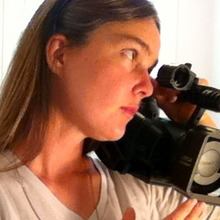
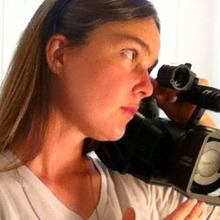
In 2011, I began work on my first short documentary film, American Other, a work exploring in group/out group phenomenon in the United States, and how our edges of group identity are often defined more by those whom we exclude, label as being outsiders, different, essentially other, than by those whom in include as belonging to our own social groups. The potential for the reach and audience participation of this project let me know that I am on the right track. It is as a work in progress, for all my intentions to have it finished long ago, it is still uncompleted. A great deal of the reason for this is that I simply do not have the skills and knowledge to produce a movie, nor the collaborative community needed to produce it. I’m more adept with a table saw than with email. I can weld circles around anybody I know, but html and Final Cut have me caught in a learning curve I have not yet managed to master. This lack of familiarity with new technology may be the largest factor in why I am here, for I suspect that I cannot begin do really make my own work again without some proficiency with it. This is closely followed, however, by my need to fully embrace my identity as a scholar. I am the first in my family to go to college; an overwhelming sense of working class identification always prevented me fully engaging with my own education. The blend of theory and production, as well as the presence of the Milano Internal Studies Program, lead me specifically to this program in Media Studies at the New School, feeling that it could uniquely address all my interests and needs.
 Charlotte Jayelle Wheeler